
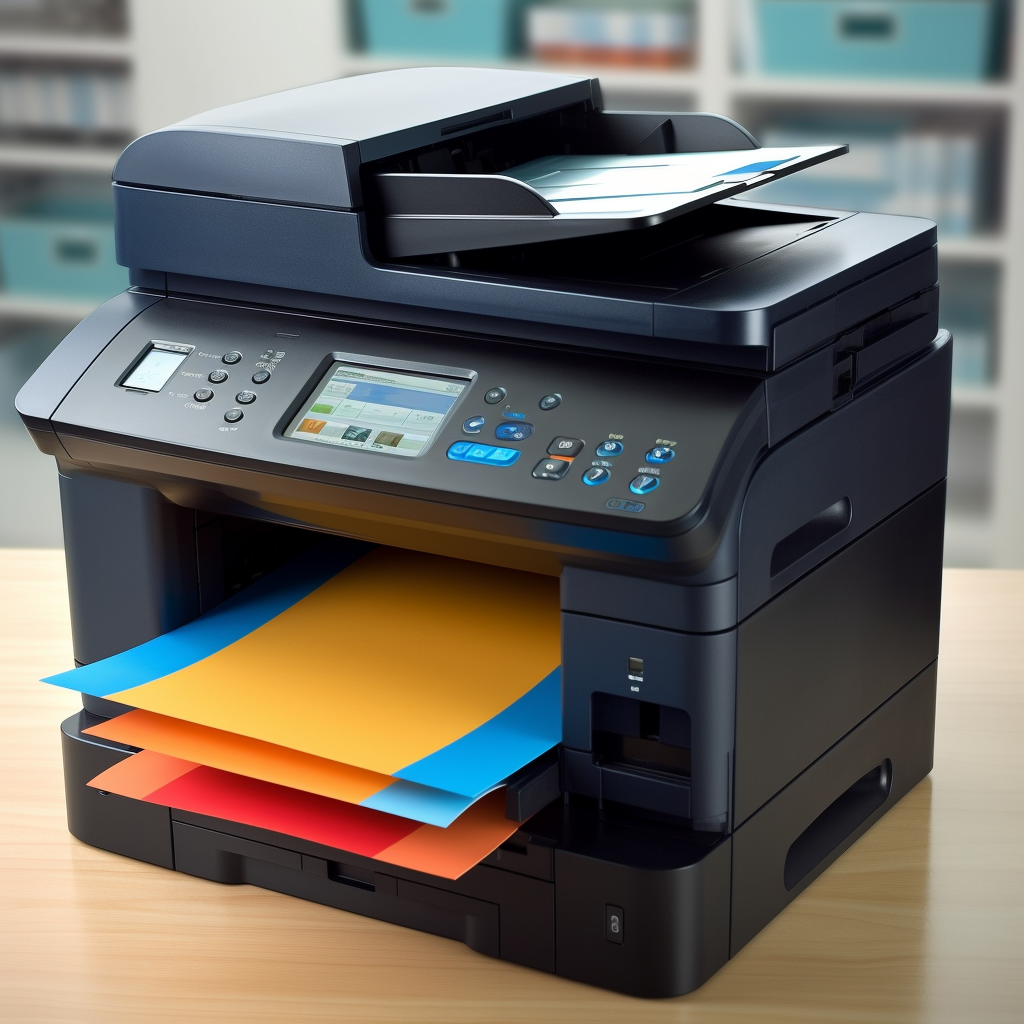
Laser printers and inkjet printers are the two most common printing techniques on the market. While they are both used to translate digital content into print, there are some significant differences in their working principle, print quality, speed, and applicable scenarios. Here are the main differences between a laser printer and an inkjet printer:
operational principle:
Laser printer: A laser printer uses a laser beam and electrostatic technology to attach the toner to the paper. The laser beam was scanned on the photosensitive drum, and the toner was fixed by hot melt and pressure on the paper to form a printed image.
Inkjet printer: An inkjet printer uses a nozzle to spray liquid ink onto the paper. The tiny vents in the nozzle spray ink, form an image or text.
print quality:
Laser printers: Laser printers usually provide a sharper, clearer printing quality, especially when printing text. They are able to present detail precisely and provide more accurate image and text gradients.
Inkjet printers: Inkjet printers perform well at printing color photos and images. They are able to present subtle color changes and color transitions, providing vivid, realistic color output.
velocity:
Laser printers: Laser printers are usually faster than inkjet printers. They can handle a large number of printing tasks in a short period of time and are suitable for commercial and office environments that require mass printing.
Inkjet printers: Inkjet printers print relatively slowly, especially at high resolution. This makes them more suitable for individual users, home users, and small offices, without having to handle a lot of printing tasks.
prime cost:
Laser printers: Laser printers usually have higher starting costs, but they can provide lower cost-effectiveness for long-term use. Toner has a longer life, changes less frequently, and toner is more economical than inkjet printer ink.
Inkjet printer: The starting cost of an inkjet printer is relatively low, but the use cost of ink is relatively high. Inkjet printers require regular replacement of ink cartridges or inks, especially at high capacity printing, where ink consumption is faster.
applicable scene:
Laser printers: Laser printers are suitable for environments that require high quality black and white printing and mass printing, such as offices, commercial institutions and schools. They are excellent for printed text and graphs.
Inkjet printers: Inkjet printers are suitable for scenarios that require color printing and require color detail, such as home users, photography enthusiasts and small offices. They do well in printing photos and color images.
In summary, there are some differences between laser printers and inkjet printers in terms of working principle, printing quality, speed and applicable scenarios. Laser printers are suitable for environments that require high quality black and white printing and mass printing, while inkjet printers are suitable for scenarios that require color printing and high levels of color detail requirements. Choosing a printer that suits your needs can improve your work efficiency and obtain satisfactory printing results.