

In today’s rapidly evolving technological landscape, businesses are constantly seeking ways to improve efficiency, security, and sustainability. One particularly fascinating area of innovation lies at the intersection of thermal paper and blockchain technology. While seemingly distinct, these two technologies are combining to offer groundbreaking solutions across various industries. From secure documentation to supply chain traceability, the integration of thermal paper with blockchain is unlocking new opportunities for businesses and consumers alike.
Enhancing Data Security with Blockchain and Thermal Paper
In an age where data security is paramount, blockchain technology has emerged as a transformative force in how information is stored, shared, and protected. Blockchain’s decentralized, immutable ledger system ensures that once data is recorded, it cannot be altered or tampered with. This creates an unparalleled level of security that is particularly crucial for handling sensitive documentation across industries.
The Importance of Immutable Records in Business
Sensitive documents, whether they are financial receipts, legal certificates, contracts, or even medical records, require a system that guarantees their integrity. Traditional storage methods often fall short, as they are vulnerable to tampering, fraud, and even accidental alteration. Blockchain’s unique structure changes this dynamic by providing a permanent and unchangeable “digital fingerprint” for every piece of data. Each transaction or entry in a blockchain is timestamped and cryptographically linked to the previous one, creating an unbreakable chain of trust.
When this technology is integrated with thermal paper printing, the benefits multiply. By printing critical documents on thermal paper that is linked to blockchain records, businesses can create a dual-layer of security. The digital blockchain record offers a permanent, tamper-proof verification, while the physical document provides an immediate, tangible reference that can be easily verified against the blockchain. This hybrid approach adds a new level of transparency and trust, as the physical and digital records work in tandem to prevent fraud and ensure accuracy.
Practical Applications: From Finance to Healthcare
Consider the financial sector, where printed receipts and transaction records play a vital role. With blockchain, each financial transaction can be securely recorded, and when printed on high-quality thermal paper, the receipt becomes more than just a piece of paper—it serves as a validated proof of transaction tied directly to the blockchain. This eliminates the risk of falsified records and provides customers with greater confidence in their financial dealings.
Similarly, in the healthcare industry, where patient records must remain accurate and confidential, blockchain-linked thermal paper can be used to print essential medical documents, such as prescriptions or test results. Each printed record can be traced back to its original blockchain entry, ensuring that patient data is protected and unaltered. This enhances both patient privacy and trust in the healthcare system.
How Thermal Paper Supports Blockchain’s Security
The role of thermal paper in this ecosystem is essential. As a durable and reliable printing medium, thermal paper is known for its ability to produce clear and precise images and text. Unlike ink-based printing, which can fade or smudge over time, thermal printing provides consistent and long-lasting results, ensuring that physical records maintain their integrity for extended periods. This longevity is crucial when dealing with important documents that may need to be referenced long after they are issued.
At Stingbull Ribbon, our thermal paper products are designed to meet the highest standards of quality and durability. By combining our premium thermal paper with blockchain technology, businesses can enjoy a seamless integration of physical and digital record-keeping. Whether you’re in finance, healthcare, legal services, or logistics, thermal paper linked with blockchain offers a forward-thinking solution to modern challenges in data security.
Building Trust with Blockchain-Linked Thermal Paper
In an increasingly digital world, customers and clients are looking for transparency and accountability. Blockchain-linked thermal paper helps build this trust by offering a clear, verifiable trail of information that cannot be disputed. For example, when a customer receives a thermal paper receipt that is tied to a blockchain record, they can verify the authenticity of the transaction at any time. This provides peace of mind that the document is genuine and unaltered, reducing disputes and enhancing customer satisfaction.
Additionally, industries such as retail, insurance, and government are also finding value in using thermal paper alongside blockchain. Whether it’s printing tax receipts, insurance policies, or legal contracts, having a secure and verifiable document that can withstand scrutiny is essential in maintaining trust and credibility in today’s market.
Future Implications for Blockchain and Thermal Paper

The future of blockchain and thermal paper integration is full of possibilities. As blockchain technology continues to evolve, we can expect to see even more sophisticated uses of thermal paper in areas like smart contracts, digital identity verification, and automated transactions. Thermal paper will remain an integral part of this landscape, providing a bridge between the digital and physical worlds.
At Stingbull Ribbon, we are committed to staying at the forefront of these innovations. Our goal is to provide businesses with the tools they need to secure their data, enhance their documentation processes, and protect their operations against fraud and tampering. As more industries adopt blockchain technology, our thermal paper solutions will continue to play a vital role in ensuring that every transaction, document, and receipt is secure, trusted, and reliable.
Revolutionizing Supply Chain Traceability with Blockchain and Thermal Paper
Supply chain transparency has become a critical priority for modern industries, where maintaining the authenticity and traceability of goods is essential for both business integrity and consumer trust. As global markets continue to expand and diversify, ensuring that products are legitimate, ethically sourced, and delivered efficiently is more important than ever. Blockchain technology is revolutionizing this landscape by providing a transparent, decentralized, and tamper-proof ledger that tracks every step of the supply chain. From the initial stages of manufacturing to the final point of delivery, blockchain offers a permanent, immutable record of every action, providing real-time visibility into a product’s journey.
How Blockchain Enhances Supply Chain Transparency
One of the primary challenges in traditional supply chain management is the complexity of tracking goods as they move through various stages and locations. In a typical supply chain, a product may pass through multiple hands—manufacturers, suppliers, logistics companies, distributors, and retailers—before it reaches the end customer. Each handoff represents a potential point of failure or fraud, where information can be lost, altered, or manipulated.
Blockchain technology solves this problem by creating a secure, digital ledger that records every transaction and transfer of ownership along the supply chain. Each participant in the chain can add information, but once data is entered into the blockchain, it cannot be altered or erased. This creates a level of transparency and accountability that traditional record-keeping systems simply cannot match. Every product is assigned a unique digital identity on the blockchain, allowing stakeholders to track its origin, verify its authenticity, and monitor its movement in real-time.
For example, in industries like pharmaceuticals, where counterfeit drugs pose serious risks to consumers, blockchain can ensure that only legitimate, verified products make it to the market. Each batch of medication can be tracked from the manufacturing facility through the distribution network to the pharmacy shelf, with each step securely logged on the blockchain. This prevents tampering, ensures regulatory compliance, and protects consumer safety.
The Role of Thermal Paper in Blockchain-Driven Supply Chains
While blockchain provides the digital backbone for secure supply chain management, physical documentation remains an essential part of the process. This is where thermal paper, particularly Stingbull Ribbon’s high-quality, durable options, plays a critical role in enhancing supply chain traceability. Thermal paper provides a reliable, cost-effective solution for printing blockchain-verified labels, receipts, and packaging materials that link the physical product to its corresponding blockchain record.
By integrating thermal paper into blockchain-driven supply chains, companies can create a seamless connection between the digital and physical worlds. For instance, when a product leaves the factory, it can be labeled with a thermal paper sticker that contains a QR code or barcode linked to the product’s blockchain record. Each time the product changes hands, the label can be scanned to update the blockchain with real-time information on its location, condition, and ownership. This ensures that at every point in the supply chain, the product’s journey is fully traceable and verifiable.
In industries like luxury goods, where brand reputation and authenticity are paramount, blockchain-linked thermal paper labels provide a robust solution for combating counterfeit products. A simple scan of the label allows customers and retailers to instantly verify the legitimacy of the item, offering peace of mind and reinforcing the brand’s commitment to quality. Similarly, in food and beverage industries, thermal paper labels with blockchain verification can ensure that products meet strict safety and quality standards, from farm to table.
Enhancing Efficiency and Reducing Costs
Beyond improving traceability and authenticity, the combination of blockchain and thermal paper also enhances the overall efficiency of supply chains. By automating the tracking process and reducing the need for manual record-keeping, companies can streamline their operations, reduce paperwork, and minimize human error. Thermal paper’s quick and accurate printing capabilities make it ideal for fast-paced environments like warehouses, logistics centers, and distribution hubs, where speed and accuracy are critical.
In addition, blockchain’s decentralized nature allows for real-time updates and data sharing among all participants in the supply chain. This reduces delays, improves communication, and helps companies respond more quickly to disruptions or issues. Thermal paper labels serve as a physical extension of this real-time data flow, ensuring that every participant has access to up-to-date information at each stage of the supply chain.
For example, a logistics company using blockchain technology can print a thermal paper label with a dynamic QR code that updates in real-time as the product moves through the supply chain. This allows drivers, warehouse workers, and delivery personnel to scan the label and instantly access the latest information, such as delivery schedules, storage conditions, or any special handling requirements. By linking physical products to digital records in this way, companies can ensure greater accuracy, reduce the risk of lost or misplaced items, and improve overall operational efficiency.
Blockchain and Thermal Paper: The Future of Secure Supply Chains
The integration of blockchain technology with thermal paper is paving the way for a new era of secure, transparent, and efficient supply chains. As businesses continue to adopt these innovative solutions, we can expect to see even greater advancements in supply chain management, including the use of smart contracts, AI-driven logistics, and real-time analytics. Blockchain provides the foundation for a more trustworthy and resilient global trade system, while thermal paper serves as the bridge that connects the digital and physical aspects of supply chain operations.
At Stingbull Ribbon, we are committed to providing the highest quality thermal paper products that support the growing demand for secure, blockchain-linked supply chains. Our thermal paper solutions are designed to withstand the rigors of the modern supply chain, offering durability, reliability, and clarity in every print. Whether you’re in pharmaceuticals, luxury goods, food and beverage, or logistics, our products ensure that your supply chain remains transparent, efficient, and secure.
Preventing Fraud and Counterfeiting with Blockchain and Thermal Paper
Fraud and counterfeiting are serious threats to industries such as luxury fashion, aviation, and pharmaceuticals, where the authenticity and integrity of products are critical to maintaining brand reputation and consumer trust. In an increasingly globalized market, counterfeit goods have become a multi-billion-dollar problem, infiltrating everything from designer handbags to prescription medications. The rise of digital commerce has further complicated efforts to combat these issues, as fraudulent sellers can easily duplicate product listings and certificates of authenticity. However, blockchain technology, when combined with thermal paper, is offering a powerful new solution to this age-old problem.
The Role of Blockchain in Fighting Fraud
Blockchain’s decentralized and immutable nature makes it a highly effective tool for securing transactions and verifying the authenticity of products. Each transaction recorded on a blockchain is encrypted and linked to the previous one, creating a permanent and unchangeable chain of information. This transparency and security make it extremely difficult for fraudsters to alter records or introduce counterfeit products into the market without detection. Once a product is registered on a blockchain, every subsequent step in its lifecycle—whether it’s manufacturing, distribution, or sale—is permanently recorded and verifiable.
In the luxury fashion industry, for example, brands are increasingly turning to blockchain to protect their products from being counterfeited. By registering each item on the blockchain, companies can provide a digital certificate of authenticity that follows the product wherever it goes. This certificate can be accessed by consumers, retailers, and even customs officials, offering an extra layer of security against fraud. Additionally, because blockchain is a decentralized technology, no single entity has control over the data, further reducing the risk of tampering or corruption.
The Power of Thermal Paper in Verifiable Proof
While blockchain offers a robust digital solution to fraud prevention, physical documentation still plays a vital role in verifying authenticity, especially for consumers. Thermal paper, particularly the high-quality options provided by Stingbull Ribbon, serves as the perfect complement to blockchain by providing a reliable and tamper-proof method of physical verification. When combined with blockchain, thermal paper can be used to print receipts, certificates, and labels that are directly linked to the digital blockchain record, creating a dual-layered system of protection.
For instance, imagine purchasing a high-end handbag from one of the luxury brands available through Stingbull Ribbon. With blockchain, the authenticity of the product is digitally guaranteed and stored on an immutable ledger. However, the consumer may also receive a thermal paper receipt or authenticity certificate that is connected to this blockchain record. This document could feature a QR code or other scannable identifier that allows the customer to instantly verify the product’s authenticity by linking back to the blockchain. In this way, the customer has both a digital and physical method of verifying the legitimacy of their purchase.
How Blockchain-Linked Thermal Paper Prevents Counterfeiting
One of the most significant advantages of blockchain-linked thermal paper is its ability to create tamper-proof proof of purchase or authenticity certificates. Thermal paper is known for its durability and longevity, making it an ideal medium for printing sensitive documents that need to withstand wear and tear. When these documents are printed with blockchain verification codes, they become even more secure. Any attempt to alter or duplicate the certificate would be immediately detectable, as the blockchain record would not match the fraudulent document.
In the aviation industry, for example, counterfeit parts pose a severe safety risk. By using blockchain-linked thermal paper to print certificates of authenticity for aircraft components, manufacturers can ensure that only verified parts are used in the construction and maintenance of airplanes. Each part can be registered on the blockchain at the time of manufacture, and a corresponding certificate can be printed on thermal paper. This certificate would then follow the part through every stage of its journey, from the factory to the hangar, ensuring that it remains traceable and verifiable.
Similarly, in the pharmaceutical industry, counterfeit medications are a growing concern. Blockchain technology, when combined with thermal paper, offers a solution by providing a secure and transparent way to track drugs from production to the pharmacy shelf. Each batch of medication can be registered on the blockchain, and a thermal paper label or certificate can be printed to accompany the product. This label can include a scannable code that links back to the blockchain, allowing pharmacists and consumers to verify the authenticity of the medication before it is dispensed or used.
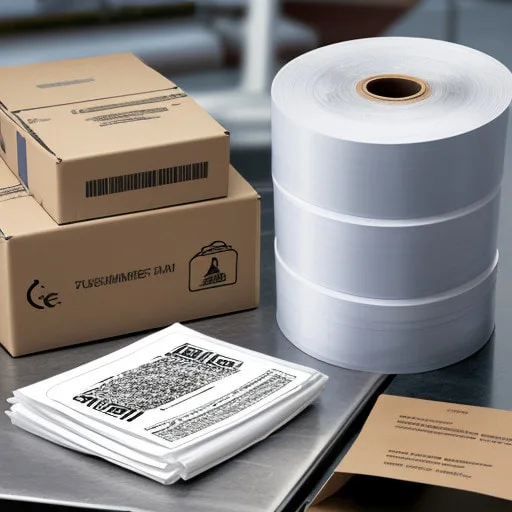
Building Consumer Trust Through Transparency
Consumers today are more informed and discerning than ever before, and they expect transparency from the brands they support. Blockchain and thermal paper offer a way for businesses to provide this transparency, ensuring that every product sold is genuine and verifiable. By combining the digital security of blockchain with the physical reliability of thermal paper, companies can offer their customers a level of trust and confidence that is unmatched by traditional methods.
For example, in the luxury goods market, where counterfeit products can severely damage a brand’s reputation, blockchain and thermal paper provide a dual-layered system of verification. A customer who purchases a designer watch from a Stingbull Ribbon-affiliated brand could receive a blockchain-linked authenticity certificate printed on thermal paper. This certificate would not only serve as proof of purchase but would also provide a scannable link to the digital blockchain record, allowing the customer to verify the watch’s authenticity at any time.
Looking Ahead: The Future of Fraud Prevention
As blockchain technology continues to evolve, we can expect to see even more sophisticated applications in the fight against fraud and counterfeiting. Smart contracts, AI-driven authentication, and enhanced encryption methods are all on the horizon, and thermal paper will continue to play a crucial role in bridging the gap between digital and physical verification.
At Stingbull Ribbon, we are committed to staying at the forefront of these innovations, offering high-quality thermal paper products that support the security needs of modern businesses. Whether you’re in luxury fashion, aviation, or pharmaceuticals, our thermal paper solutions can help ensure that your products remain genuine, traceable, and secure from the point of manufacture to the hands of your customers.
Smart Contracts and Thermal Paper Integration
Smart contracts represent a groundbreaking innovation in blockchain technology. These digital agreements automatically execute and enforce contractual terms when predefined conditions are met, without the need for intermediaries. This automation significantly reduces the potential for human error, streamlines operations, and enhances transparency. When integrated with thermal paper, smart contracts can revolutionize business transactions by adding a reliable and tangible layer of documentation.
Understanding Smart Contracts
Smart contracts are self-executing contracts with the terms of the agreement directly written into code. They run on blockchain networks and automatically execute actions such as transfers of assets or updates to records when specified conditions are met. This eliminates the need for manual intervention and ensures that all parties adhere to the agreed terms.
For example, in a simple transaction, a smart contract might be programmed to release payment once goods are delivered and verified. Because the contract operates on a blockchain, all actions are recorded in a transparent, immutable ledger, providing real-time visibility and accountability.
The Role of Thermal Paper in Smart Contract Transactions
While smart contracts operate in the digital realm, physical documentation remains crucial for many business processes. Thermal paper, known for its durability and clarity, can be seamlessly integrated into smart contract workflows to provide a tangible record of transactions. Here’s how this integration enhances various aspects of business operations:
Automated Receipt Printing: In logistics and supply chain management, smart contracts can be used to automate the entire documentation process. Upon confirmation of delivery, a smart contract can trigger the automatic printing of a thermal paper receipt. This receipt, linked to the blockchain, serves as physical proof of the transaction and can be easily verified against the digital record. This integration simplifies record-keeping and ensures that every transaction is accurately documented.
Verification and Audit Trails: Thermal paper receipts or labels printed in conjunction with smart contracts provide a reliable audit trail. For instance, a smart contract could automatically print a certificate of completion for a service, which is then linked to the blockchain. This certificate can be used for verification purposes, ensuring that both parties have a physical and digital record of the transaction. This is particularly useful in industries like real estate or high-value asset sales, where verification and record-keeping are crucial.
Enhanced Customer Experience: By integrating smart contracts with thermal paper, businesses can offer customers a seamless and professional experience. For example, a retail store might use smart contracts to manage promotions or warranties. When a purchase is made, the smart contract automatically generates a thermal paper receipt that includes details about the promotion or warranty terms. This enhances customer satisfaction by providing clear, verifiable documentation of their purchase.
Practical Applications Across Industries
The integration of smart contracts and thermal paper can benefit a wide range of industries by improving efficiency, transparency, and customer trust. Here are a few examples of how this integration can be applied in different sectors:
Logistics and Supply Chain: In logistics, smart contracts can automate the tracking of shipments and manage inventory. As products move through the supply chain, thermal paper labels can be printed with blockchain-linked data, providing real-time updates and verification of each shipment’s status. This reduces the risk of errors and ensures that all stakeholders have accurate, up-to-date information.
Real Estate: Smart contracts can streamline property transactions by automating tasks such as payment transfers and document signing. Thermal paper receipts or certificates can be generated for each step of the transaction, providing physical proof of contract execution and enhancing the overall efficiency of the process.
Retail: In the retail sector, smart contracts can be used to manage loyalty programs, returns, and warranties. Thermal paper receipts linked to blockchain records can provide customers with secure and verifiable proof of their transactions, making it easier to process returns or claim warranties.
Benefits of Integrating Thermal Paper with Smart Contracts
Combining smart contracts with thermal paper offers several key benefits:
Increased Efficiency: Automation of documentation reduces the need for manual record-keeping, streamlining business operations and saving time. Thermal paper provides a reliable medium for printing documents that align with the automated processes of smart contracts.
Enhanced Security: Blockchain technology ensures that all records are secure and tamper-proof. By linking thermal paper documents to the blockchain, businesses can provide an additional layer of security and authenticity for their physical records.
Professionalism and Reliability: High-quality thermal paper from Stingbull Ribbon ensures that every printed receipt or label is clear, durable, and professional. This enhances the overall image of your business and reinforces the reliability of your smart contract-based transactions.
Improved Customer Trust: Providing customers with both digital and physical proof of transactions builds trust and confidence. By integrating thermal paper with smart contracts, businesses can offer a seamless and transparent experience, ensuring that customers have verifiable documentation of their interactions.
The Future of Smart Contracts and Thermal Paper
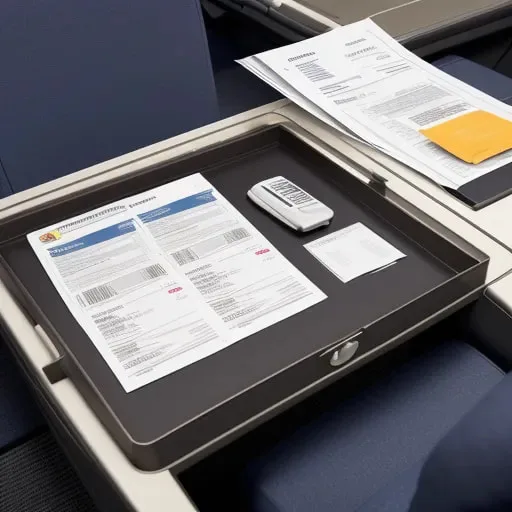
As technology continues to advance, the integration of smart contracts and thermal paper is likely to become even more sophisticated. Future developments may include enhanced security features, more advanced printing technologies, and greater automation in document generation and verification.
At Stingbull Ribbon, we are dedicated to supporting businesses with high-quality thermal paper solutions that complement the innovative capabilities of smart contracts. Our durable, reliable products are designed to integrate seamlessly with blockchain technology, providing a robust and professional solution for modern business needs.
Whether you are looking to streamline your logistics operations, enhance your retail customer experience, or manage complex real estate transactions, our thermal paper products can help you leverage the full potential of smart contracts. By combining the best of digital and physical documentation, we are paving the way for more efficient, secure, and transparent business practices.
Sustainable Blockchain Solutions with Eco-Friendly Thermal Paper
As blockchain technology continues to revolutionize various industries with its secure and transparent capabilities, there is an increasing awareness of its environmental impact. The energy-intensive nature of blockchain, particularly in proof-of-work systems, has raised concerns about its carbon footprint. This has led many businesses to seek more sustainable solutions that align with their environmental goals. At Stingbull Ribbon, we recognize the importance of integrating eco-friendly practices with technological advancements, which is why we are committed to offering sustainable thermal paper options that complement greener blockchain applications.
The Environmental Impact of Blockchain Technology
Blockchain technology, while offering significant benefits in terms of security and transparency, is often criticized for its high energy consumption. The process of mining cryptocurrencies, for instance, requires vast amounts of computational power and energy, contributing to a substantial carbon footprint. Even in blockchain applications beyond cryptocurrencies, the infrastructure needed to support and maintain blockchain networks can be resource-intensive.
In response to these concerns, industries are increasingly looking for ways to mitigate the environmental impact of their technology investments. This includes adopting more energy-efficient blockchain protocols, such as proof-of-stake, and integrating sustainable practices across all aspects of their operations.
The Role of Eco-Friendly Thermal Paper
In the context of blockchain technology, thermal paper plays a crucial role in providing physical documentation and verification. However, traditional thermal paper can have environmental drawbacks, such as being non-recyclable or containing harmful chemicals. To address these issues, Stingbull Ribbon offers a range of eco-friendly thermal paper options that align with our commitment to sustainability.
1. Biodegradable Thermal Paper: Biodegradable thermal paper is designed to break down naturally over time, reducing its environmental impact. Unlike conventional thermal paper, which can persist in landfills for years, biodegradable thermal paper decomposes more quickly, minimizing waste and environmental pollution. This type of thermal paper is ideal for businesses that want to reduce their ecological footprint while still benefiting from the advantages of thermal printing.
2. Recyclable Thermal Paper: Recyclable thermal paper is made from materials that can be processed and reused in recycling facilities. By using recyclable thermal paper, businesses can contribute to a circular economy where resources are reused rather than discarded. This approach helps reduce the demand for virgin materials and lowers overall waste production. Recyclable thermal paper is a practical choice for companies looking to integrate sustainable practices into their operations.
Integrating Eco-Friendly Thermal Paper with Blockchain Technology
Combining eco-friendly thermal paper with blockchain technology offers a powerful solution for businesses aiming to enhance their sustainability efforts. Here’s how this integration benefits both the environment and business operations:
1. Sustainable Documentation: By using biodegradable or recyclable thermal paper for blockchain-related documentation, businesses can ensure that their physical records have minimal environmental impact. For example, a company using blockchain to verify the authenticity of products can print receipts or certificates on eco-friendly thermal paper. This reduces waste and aligns with the company’s sustainability goals while maintaining the benefits of blockchain technology.
2. Eco-Conscious Brand Image: Incorporating sustainable practices into business operations not only helps the environment but also enhances a company’s brand image. Consumers and stakeholders are increasingly prioritizing environmental responsibility, and businesses that adopt eco-friendly solutions demonstrate their commitment to sustainability. By using eco-friendly thermal paper in conjunction with blockchain technology, companies can position themselves as leaders in both technological innovation and environmental stewardship.
3. Supporting Green Blockchain Initiatives: The demand for greener blockchain solutions is growing, and many organizations are exploring ways to reduce the energy consumption associated with blockchain networks. By integrating eco-friendly thermal paper, businesses can support these initiatives and contribute to a more sustainable technology ecosystem. This holistic approach to sustainability ensures that all aspects of a company’s operations, from digital to physical, are aligned with environmental goals.
Practical Applications and Benefits
1. Retail and E-Commerce: In the retail and e-commerce sectors, businesses can use eco-friendly thermal paper to print receipts, labels, and invoices linked to blockchain records. This not only provides customers with secure and verifiable documentation but also reduces the environmental impact of their operations. For example, a retailer using blockchain for supply chain transparency can print product labels on recyclable thermal paper, enhancing both traceability and sustainability.
2. Logistics and Supply Chain: In logistics and supply chain management, eco-friendly thermal paper can be used to print shipping labels, delivery receipts, and certification documents. This integration helps ensure that physical records are environmentally responsible while supporting the transparency and security offered by blockchain technology. Companies can track and manage their shipments with minimal environmental impact, aligning with broader sustainability goals.
3. Financial and Legal Documentation: For industries that require secure financial and legal documentation, such as banking and real estate, eco-friendly thermal paper offers a sustainable alternative for printing contracts, receipts, and verification documents. By adopting biodegradable or recyclable thermal paper, these industries can reduce their ecological footprint while maintaining the integrity and security of their documentation.
Moving Forward with Sustainable Solutions
The integration of eco-friendly thermal paper with blockchain technology represents a significant step toward a more sustainable future. As businesses and industries continue to seek ways to reduce their environmental impact, adopting eco-friendly practices and technologies will become increasingly important.
At Stingbull Ribbon, we are dedicated to providing high-quality, eco-friendly thermal paper products that support sustainable blockchain applications. Our commitment to environmental responsibility is reflected in our range of biodegradable and recyclable thermal paper options, designed to meet the needs of businesses while minimizing their ecological footprint.
By choosing eco-friendly thermal paper, businesses can contribute to a more sustainable technology ecosystem and demonstrate their commitment to environmental stewardship. Together with blockchain technology, we can build a future that balances innovation with responsibility, ensuring that technological advancements are aligned with the goal of a healthier planet.
Conclusion: A Bright Future for Thermal Paper and Blockchain
The combination of thermal paper and blockchain technology is opening up new possibilities across industries, from enhancing security to ensuring product authenticity and even supporting sustainable business practices. As blockchain continues to evolve, we can expect to see even more innovative applications of thermal paper in areas like logistics, smart contracts, and supply chain management.
At Stingbull Ribbon, we are excited to be at the forefront of this intersection, offering high-quality thermal paper products that meet the demands of today’s digital age while supporting the goals of sustainability and security. Explore our collections and discover how our thermal paper can support your blockchain-driven operations.
Whether you’re looking to secure your documentation, trace your products, or embrace a more eco-friendly future, our thermal paper products are designed to meet your needs and align with the innovations of tomorrow.