
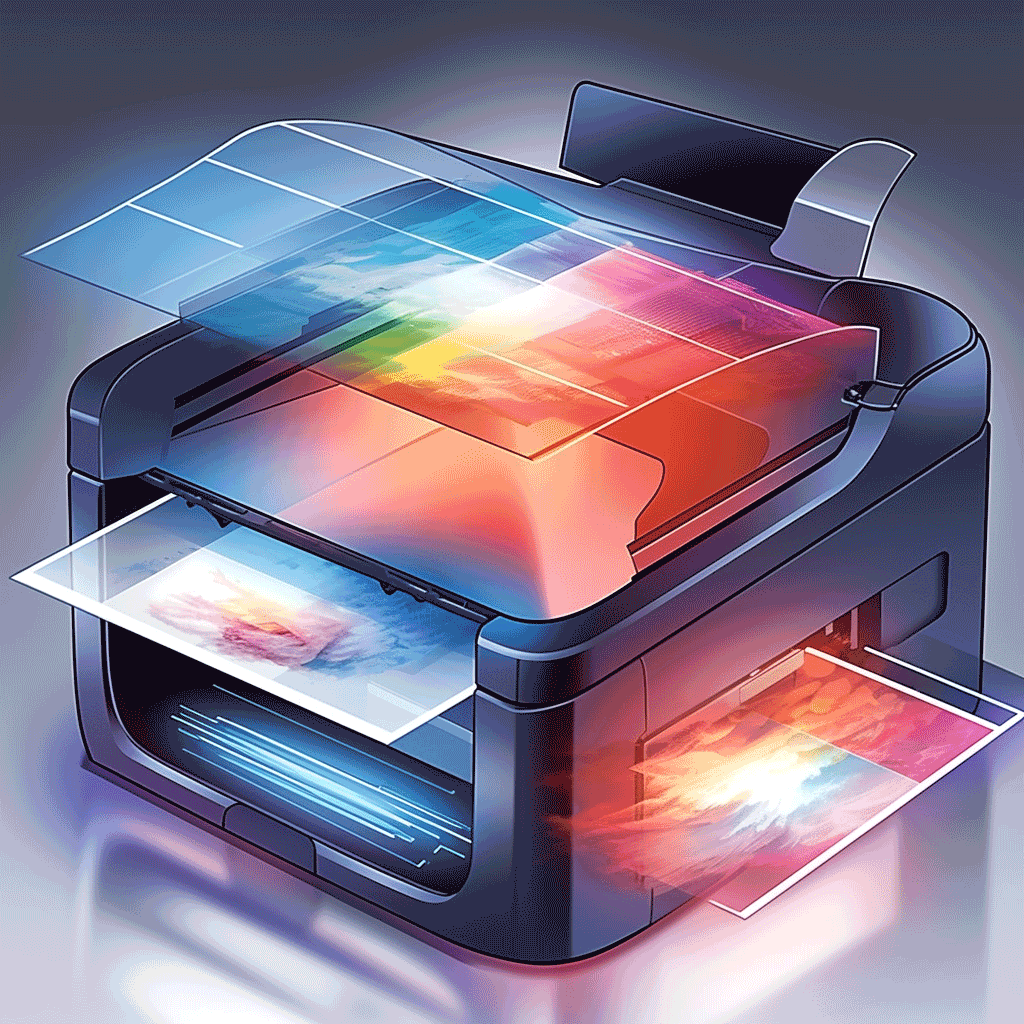
In daily printing, we often hear about ink printers, but for laser printers, do we also need to use ink? This paper will reveal the mystery of laser printing technology to answer this question.
First, answer the question: The laser printer does not use ink. This is because laser printers use a different printing technology, called photoelectron electrostatic imaging (Electrophotographic Imaging) or laser phototypesetting technology.
So, how do laser printers work? Let’s understand the basic principles of laser printing technology:
Laser scanning: A laser printer uses a highly accurate laser beam to scan the surface of the printed paper. This laser beam passes the control of the switch during the scan to map out the pixels or points needed for the image or text.
Electrostatic imaging: When a laser beam scans the printed paper, it interacts with a component called a “photosensitive drum” or a “photosensitive device”. The photosensitive drum is coated with a special chemical that is activated by the charge where illuminated by the laser beam.
Toner adsorption: Once the area on the photosensitive drum is activated, the printer attaches the toner to the activated area through a developer drum containing toner (also known as “toner”).
Transfer process: When the toner is attached to the area of the photosensitive drum, the printing paper is transmitted above the photosensitive drum. A component called the “transfer roll” was used to transfer the toner from the photosensitive drum onto the printing paper.
Curing process: Once the toner is transferred to the print paper, the print paper is transferred to a part called a “curder”. The high temperature and pressure in the curder help the toner blend into the paper to ensure that the printing quality is durable and durable.
The main reason laser printers use toner instead of ink is how laser printing works. Toner is a finely powder that forms an image after interacting with the charge on the photosensitive drum. The use of toner enables laser printers to achieve high resolution, high speed, and durable printouts.
Compared to ink printers, laser printers have some unique advantages. First, the use of toner allows laser printers to achieve higher printing quality and precision. Because the toner particles are small and uniform, laser printers can produce sharper, clear images and text.
Second, laser printers usually print faster than ink printers. The way laser technology works enables the printer to complete a large number of printing tasks in a short time, suitable for office environments and occasions where large quantities of printing are needed.
In addition, laser printers also have higher durability and stability. The toner is fused to the printing paper during the curing process to form a durable printing quality. Laser printers usually have a long life span and are capable of handling higher printing capacity.
It should be noted that toner is consumables in laser printers. As the printing task proceeds, the toner is gradually consumed and needs to be replaced. Users need to purchase the appropriate toner cartridge or toner package to keep the printer running properly.
In summary, laser printers do not use ink, but use toner to achieve high quality, high speed printout. Toner printing technology makes laser printers a popular printing solution for a variety of printing needs, whether in an office environment or for personal use.