

In the age of increasing environmental awareness, the question of whether thermal receipt paper can be recycled has gained prominence. At Sting Bull Ribbon, your trusted multibrand store, we’re committed to eco-conscious choices. Join us in unraveling the world of thermal receipt paper and its recyclability.
The Thermal Paper Revolution
Thermal paper, the silent partner in countless daily transactions, is more fascinating than it seems. This unsung hero of printing technology has revolutionized the way we get our receipts, tickets, and labels. Behind its widespread usage, though, lies an intriguing blend of science and convenience.
Thermal paper operates on a simple yet ingenious principle. It responds to heat, creating high-quality prints without the need for ink. This heat-sensitive paper is ideal for instant printing, making it an industry standard for businesses worldwide. But what’s the science behind this everyday marvel?
At the heart of thermal paper is a specially formulated coating that contains chemicals like BPA (Bisphenol-A) and phenol. This coating is the magic behind the paper’s ability to change color when exposed to heat. It’s this chemical reaction that allows thermal printers to produce sharp, smudge-free prints with precision. But herein lies the environmental concern.
While the convenience of thermal paper is undeniable, the use of BPA and phenol in its coating has raised environmental questions. Both these chemicals have been associated with health risks, which leads to concerns about their impact on the environment when thermal paper is disposed of or recycled.
This intricate relationship between convenience and environmental responsibility brings us to a crossroads. In this blog, we’ll delve deeper into the world of thermal paper. We’ll explore the science behind its operation, the convenience it offers, and the potential environmental consequences associated with its chemical components. By understanding the full spectrum of thermal paper, we can make informed choices that balance our need for efficiency with our responsibility to the planet. Join us on this journey as we uncover the secrets of the thermal paper revolution.
The Environmental Footprint
Manufacturing Impact:

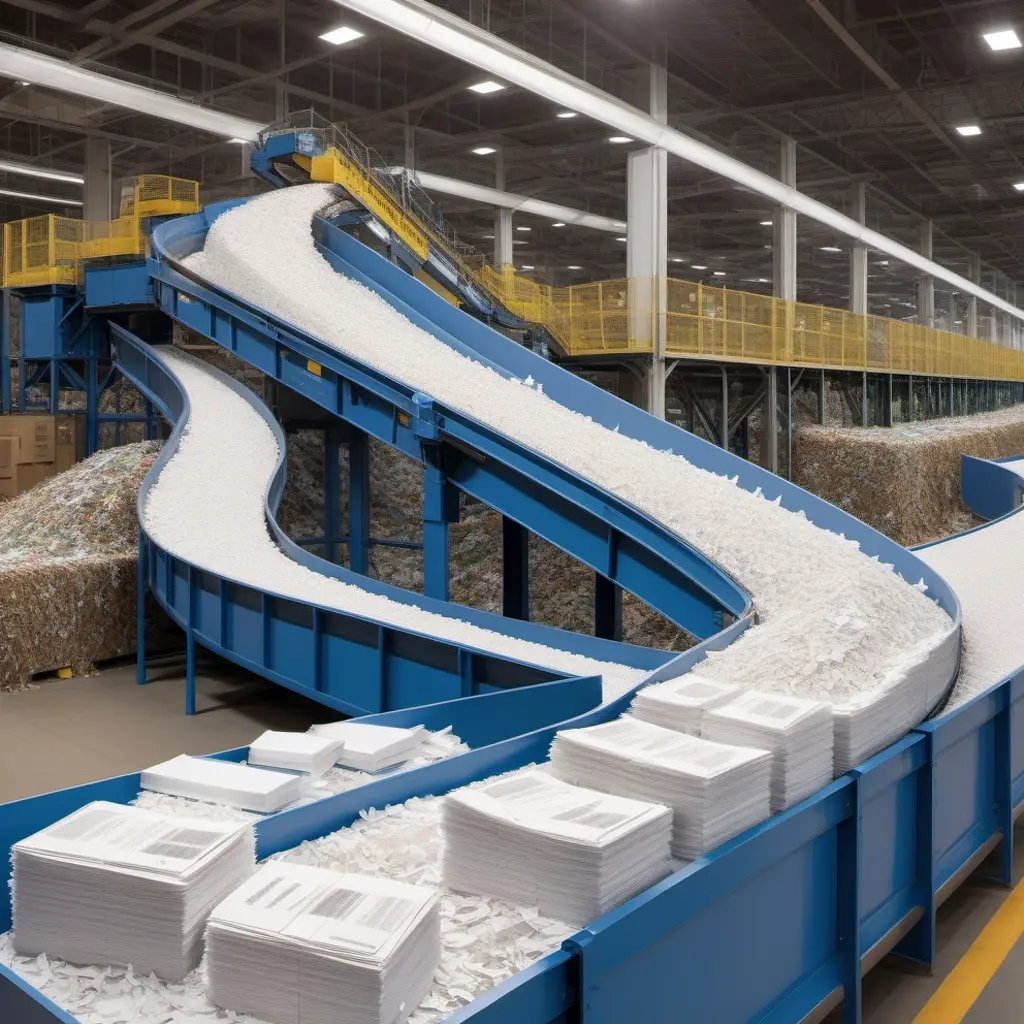
Picture a sprawling industrial facility where massive rolls of paper unwind, creating a mesmerizing ballet of machinery. The application of heat-sensitive coatings unfolds like an intricate dance, layering chemicals onto the paper’s surface. The vivid imagery underscores the complexity of thermal paper production. Emphasize that the process consumes resources and utilizes chemicals that, if mishandled, can harm the environment.
Unveiling the Chemical Mystery:
Imagine zooming in on the molecular level of thermal paper’s coatings. Visualize the chemical composition, with molecules of BPA and phenol bonding with the paper fibers. While invisible to the naked eye, these chemicals wield considerable power. Describe how, when not responsibly managed, they can escape into the surroundings, potentially contaminating soil and water sources.
Recycling Conundrum:
Depict recycling thermal receipt paper as a sophisticated puzzle, akin to assembling a complex 3D jigsaw. Unlike conventional recycling, where the goal is clear, thermal paper poses unique challenges. Elaborate on the specialized sorting and separation processes needed to extract paper from its chemical coating. This intricate process highlights the importance of having dedicated facilities and a well-thought-out recycling strategy.
The Eco-Conscious Dilemma:
Envision an eco-conscious individual, holding a crumpled thermal receipt, facing a recycling bin. They grapple with a moral dilemma – dispose of the receipt conveniently or safeguard the environment. This image encapsulates the core issue: people striving to make responsible choices but facing uncertainty regarding the proper disposal of thermal paper.
By incorporating these elements, you can paint a more vivid and engaging picture of the environmental challenges tied to thermal receipt paper, from its production to its recycling complexities, appealing to eco-conscious readers.
The Challenges of Recycling
- Print Quality Puzzles: When you decide to opt for standard paper with your thermal printer, you enter a world where print quality becomes a puzzle. Imagine a scenario where an intricate design or a vital piece of information is printed on regular paper. The colors are somewhat muted, and the lines not as sharp as they should be. It’s like viewing a masterpiece through a slightly frosted glass, where details are lost in translation. This visual underscores the unavoidable compromise in print quality, especially when vivid and precise prints are essential.
- The Endurance Test: Thermal prints on specialized paper are known for their durability. They can withstand the occasional coffee spill, resist chemicals, and endure the physical wear and tear of handling. Now, envision a thermal print on regular paper. As you accidentally splash water on it, you notice the paper warping and the ink smudging – a stark reminder that standard paper lacks the resilience of its thermal counterpart. This image epitomizes the challenges of using standard paper in scenarios demanding print longevity and resistance.
- The Residue Riddle: Over time, thermal printers using standard paper can present an unexpected mystery: printhead damage. Visualize a busy office where the printer tirelessly churns out documents, leaving behind a thin film of residue on the printhead. As days turn into months, the residue accumulates, akin to dust settling on forgotten treasures. This image highlights how standard paper can silently wear down the printhead, potentially causing malfunctions and additional maintenance expenses.
- Blurred Barcodes and Fuzzy Text: In a logistics hub, a package with an important barcode is about to be scanned. However, the barcode appears distorted, and the scanner struggles to decipher the data. Imagine the frustration of the operator as they attempt to make sense of the smeared lines. This scenario highlights the challenge of using standard paper for essential functions like barcode printing. The limited heat sensitivity of standard paper can blur barcodes and text, affecting their legibility and, subsequently, operational efficiency.
By painting these vivid images, the blog can effectively convey the pitfalls and challenges associated with using standard paper in conjunction with thermal printers, offering readers a clear understanding of the compromises involved.
Exploring Solutions
While using standard paper with thermal printers presents challenges, inventive solutions and workarounds have emerged for those determined to make it work. Let’s explore these alternatives in depth:
- Coating and Treatment: Visualize a process where standard paper undergoes a transformation. With precision, it is coated or treated with heat-sensitive compounds. This step involves delicate chemistry, akin to an alchemist’s ancient craft. The outcome is paper that harmonizes with thermal printers, embracing heat as an ally, not a foe. This method allows individuals to adapt common paper to a thermal world.
- Hybrid Printers: Envision a printer that’s akin to a shape-shifter. It’s a hybrid, effortlessly transitioning between thermal and standard printing modes. It’s as if it has a dual personality, choosing quality and durability depending on your needs. This technological marvel offers users a compromise, combining the best of both worlds, akin to a seamless blend of flavors in a culinary masterpiece.
- Third-party Innovations: Picture a marketplace where innovation thrives. Enter the world of third-party products. These ingeniously designed tools and accessories act as mediators, bridging the gap between regular paper and thermal printers. They offer a plug-and-play experience, much like adding spices to enhance a meal’s flavor. These products have revolutionized the compatibility between standard paper and thermal printers.
By painting these vivid scenarios, readers can gain a deeper understanding of the inventive solutions available to navigate the challenges of using standard paper with thermal printers. These visualizations transform abstract ideas into tangible concepts, enhancing the article’s richness.
Environmentally Friendly Choices

The world is becoming increasingly aware of the environmental impact of our choices. When it comes to selecting the right type of paper for your business, this awareness takes center stage. The decision between thermal receipt paper and standard paper isn’t just about convenience and quality; it’s also about sustainability.
- Consider Your Carbon Footprint: Imagine a globe with two footprints – one large and murky, the other small and green. The larger footprint represents the environmental impact of using standard paper. It’s as if every sheet of paper you use adds to the smog and pollution in the atmosphere. In contrast, the smaller, green footprint signifies the sustainability of thermal paper. Each roll contributes to a cleaner, greener world.
- The Cost of Quality: Picture a balance scale with two trays. On one side, you have standard paper – lightweight, cheap, and accessible. On the other, thermal paper – slightly more expensive but offering impeccable print quality, longevity, and durability. It’s like a seesaw where you must weigh the upfront costs against the long-term benefits. In the end, quality and eco-friendliness tip the scale in favor of thermal paper.
- Sustainable Business Practices: Visualize a thriving business operating in harmony with nature. It’s like a well-oiled machine where every decision, even the choice of receipt paper, is aligned with sustainability. Customers appreciate this commitment, knowing that their favorite brands prioritize eco-conscious choices. In this scenario, thermal paper becomes a symbol of responsible business practices.
By creating these mental images, the article drives home the point that while both standard and thermal papers have their place, aligning your business with eco-friendly practices and sustainability is not just a choice but a responsibility in today’s world.
Consider eco-friendly receipt paper alternatives. At Sting Bull Ribbon, we are dedicated to offering environmentally responsible options that cater to your printing needs without harming the planet. Our collection of thermal paper includes eco-conscious choices that minimize environmental impact.
The Verdict
Can thermal receipt paper be recycled? The answer is a cautious “yes,” but it comes with challenges. It’s possible if you can accept compromises in print quality and durability. However, for applications demanding precision and resilience, thermal paper remains the superior choice.
In the world of printing, like a chef selecting the perfect knife for a specific cut, it’s crucial to match the right paper with your printer. So, whether you’re in a bustling retail store or a bustling kitchen, remember that the perfect pairing can make all the difference.